Finding the right commercial property is only the beginning. Whether you are opening a new office, expanding a retail business, or preparing a suite for a new tenant, the space needs to support everyday operations before people move in.
Commercial tenant improvements modify an existing building or unfinished commercial suite for a particular business. For property owners, tenants, and business operators in Loveland, Fort Collins, Greeley, and surrounding Northern Colorado communities, understanding the process helps reduce surprises and plan an efficient project. G2 Construction offers commercial construction and tenant improvement services for functional business environments.
What Are Commercial Tenant Improvements?
Tenant improvements, often abbreviated TIs, are changes made to a leased or owned commercial space so it better fits a business. The scope can range from cosmetic upgrades to changes in layout and building systems.
Typical examples include:
- Installing or relocating interior walls
- Updating floors, ceilings, and lighting
- Modifying electrical or plumbing systems
- Building reception areas, offices, and conference rooms
- Installing restrooms, break rooms, and commercial doors
- Improving accessibility and interior finishes
A professional office and a fitness studio might occupy the same type of suite, but their spatial needs and mechanical requirements can be very different.
What Is the Difference Between Tenant Finish and Tenant Improvement?
Tenant finish
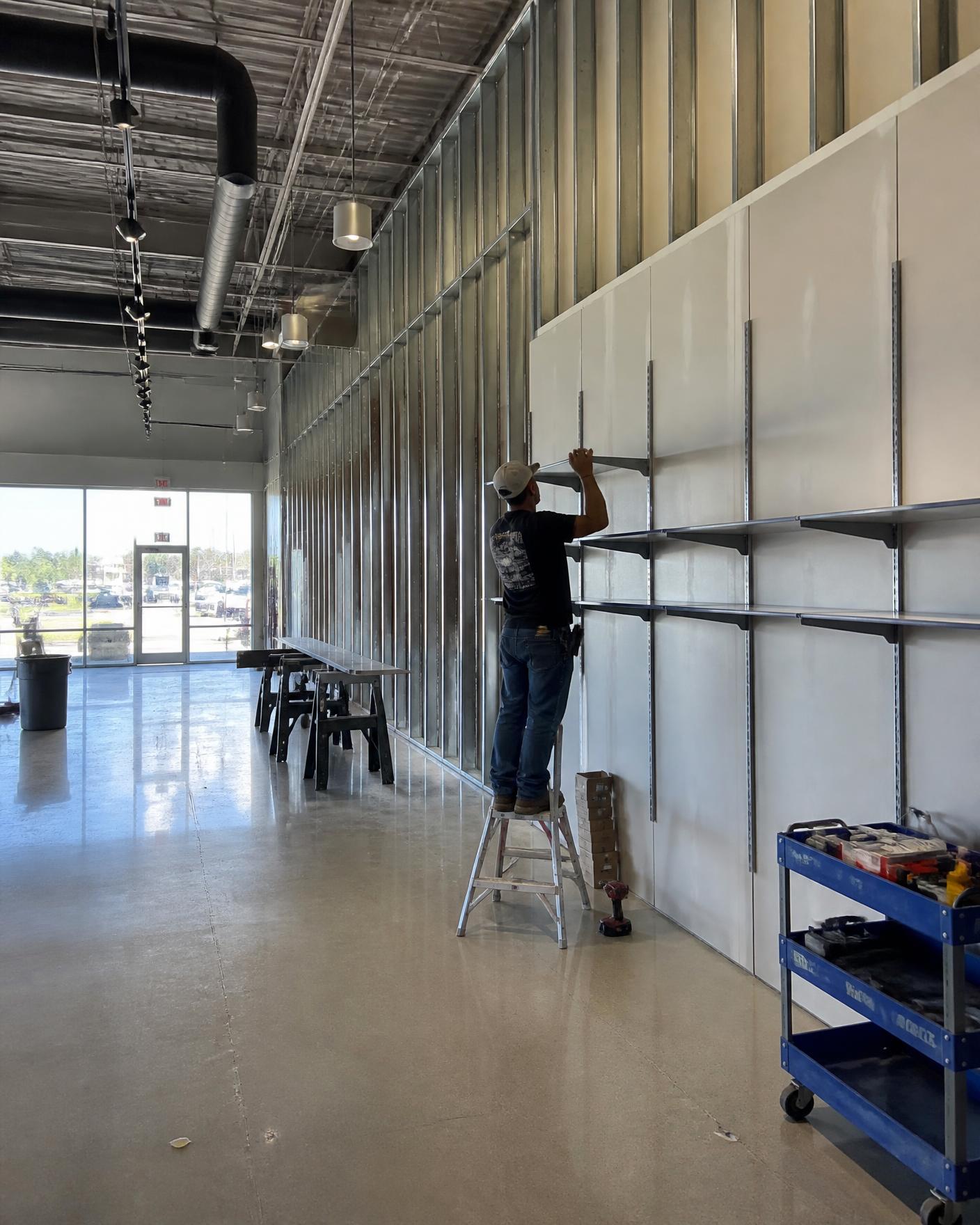
Tenant finish generally describes completing an unfinished commercial interior. A new building might have a bare suite with essential infrastructure but no finished rooms, flooring, or ceilings. The construction project prepares that space for its intended business use.
Tenant improvement
Tenant improvement often refers to modifying a previously finished or occupied space. A company might reconfigure offices, replace flooring, revise lighting, or update other interior features. In practice, the terms are sometimes used interchangeably.
When Should You Hire a Commercial Tenant Improvement Contractor?
Bring a contractor into the conversation early, ideally before committing to a lease or opening date. An early site assessment can reveal whether the suite can accommodate the proposed use and whether significant infrastructure changes are needed.
For instance, a space that looks suitable for a business may not have sufficient plumbing, ventilation, or electrical capacity. Identifying such constraints before major financial decisions gives owners and tenants more options.
A contractor can also evaluate the construction scope, materials, scheduling challenges, and coordination needs at the outset.
How Does the Commercial Tenant Improvement Process Work?
1. Initial walkthrough and assessment
A contractor inspects the layout and condition of the space while discussing how the business intends to operate. Important items include electricity, plumbing, HVAC, accessibility, occupancy classification, building conditions, and construction access.
2. Space planning and design
The team determines the required rooms, circulation routes, workstations, display areas, storage, customer service zones, and specialized equipment. Office, retail, medical, and food-service businesses may require significantly different layouts and building systems.
3. Budget and scope
The project scope identifies required construction, materials, trade work, and anticipated approvals. Distinguishing essential occupancy needs from optional upgrades is especially useful.
4. Permits and approvals
Many commercial renovations require building permits and inspections. Depending on the scope, accessibility, fire safety, mechanical systems, or a change in use may trigger additional reviews. The landlord or property manager may have its own approval process.
5. Construction and coordination
A general contractor schedules demolition, framing, drywall, electrical, plumbing, flooring, ceilings, painting, and finish work in the right sequence. Trade coordination helps prevent unnecessary delays and rework.
6. Final inspection and turnover
Required inspections and punch-list work are completed, and the business confirms that any necessary occupancy approval is in place before opening.
What Affects Commercial Tenant Improvement Costs?
Costs vary with the existing condition of the property and the intended business use.
Existing conditions
An unfinished shell often needs more interior work than a previously built-out suite. Still, existing construction may hide problems that only become apparent during renovation.
Building systems
Changes to heating, cooling, electrical power, plumbing, and fire protection may be needed to support the layout or equipment.
Materials and finishes
Flooring, ceilings, cabinetry, doors, interior glass, and other materials influence both budget and long-term durability.
Permitting and compliance
Building code, accessibility, fire safety, and occupancy requirements may add necessary work beyond visible cosmetic upgrades.
Schedule and lead times
Compressed deadlines can create coordination demands. Ordering critical materials early and setting a realistic schedule can reduce avoidable disruption.
Why Commercial Construction Experience Matters
Commercial interiors must work for customers, staff, business operations, and ongoing maintenance. An experienced general contractor manages subcontractors, coordinates schedules, and communicates with stakeholders.
Landlords and property managers may also impose construction access rules or documentation requirements. For spaces that see frequent foot traffic, choosing durable materials is often a long-term business decision rather than purely an aesthetic one.
G2 Construction emphasizes organized commercial project management and coordination across trades, helping business owners and property stakeholders move through the construction process.
What Should Business Owners Do Before Starting a Tenant Improvement Project?
- Define the space's operational requirements and nonnegotiable features.
- Review your lease for construction obligations and landlord approvals.
- Confirm the proposed business use is allowed on the property.
- Establish an opening or occupancy target, allowing for approvals.
- Identify equipment and utility requirements early.
- Set a realistic budget and discuss contingencies.
- Ask about permits, inspections, and material lead times.
Bringing a contractor into the property evaluation process can be especially valuable when the space needs extensive renovation.
Tenant Improvement Opportunities Across Northern Colorado
In Loveland, a business owner may convert an existing suite into a professional office. In Fort Collins, a retailer might prepare an interior for a new storefront. In Greeley, a company may need additional workspaces or better customer circulation. Each calls for a different approach, but all benefit from clear planning and coordinated construction.
Frequently Asked Questions About Commercial Tenant Improvements
What is included in a tenant improvement project?
Projects may include walls, flooring, ceilings, lighting, restrooms, plumbing, offices, accessibility improvements, and other work required for the intended business use.
Who pays for tenant improvements?
That depends on the lease. Some landlords provide an improvement allowance, while tenants may fund part or all of the work. Review the agreement carefully.
Do tenant improvements require permits?
Many do, especially if structural elements, building systems, accessibility, or occupancy are affected. Requirements vary by jurisdiction and project scope.
How long does a tenant finish project take?
The size of the space, condition, scope, permits, and material availability all affect the timeline. A contractor can create a more useful schedule after evaluating the space.
Can a business stay open during construction?
Sometimes phased work is possible, depending on safety, access, utilities, and operations. Any continued occupancy must comply with applicable requirements.
Does G2 Construction work on commercial projects in Loveland and Fort Collins?
G2 Construction offers commercial construction and tenant improvement services for Northern Colorado. Confirm project type and service availability with the team.
Prepare Your Commercial Space With G2 Construction
Whether opening a new location, renovating an office, or preparing a property for its next tenant, a clear scope and coordinated construction plan are essential. G2 Construction offers tenant improvement, tenant finish, and commercial construction services for Loveland and the surrounding Northern Colorado area.
Call 970-893-0525 or request a free quote online to discuss your commercial renovation or buildout.